
Lash Lamination or Extensions? Chișinău Guide
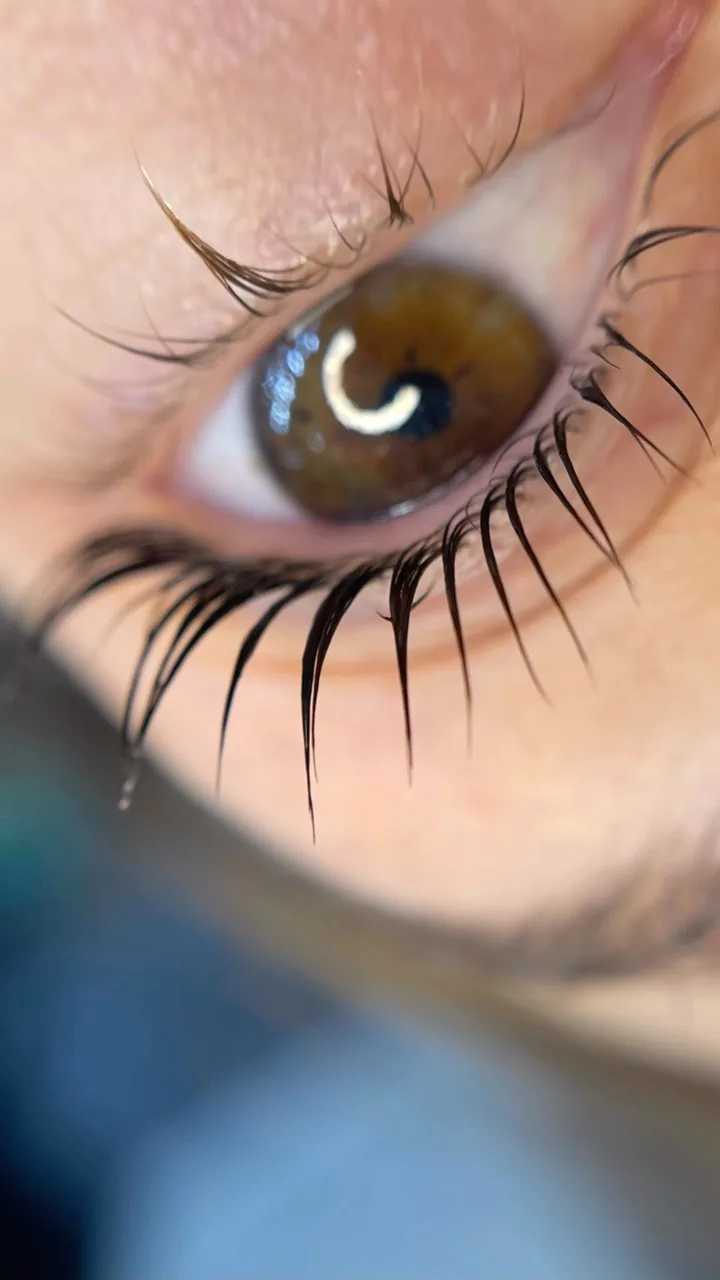
Looking at a photo, you often cannot tell whether you are seeing extensions or lamination — the final effect can look alike. The difference is in everything else: how long you sit in the chair, how often you come back, what it costs you over three months and how much your diary depends on appointments. Let us line them up side by side.
Two different logics: your own lashes, or hairs added
Lamination works with your natural lashes: it curls them from the root, nourishes them and, optionally, tints them for a more intense look. Nothing is added — the effect is “your lashes, but better”.
Extensions add fine hairs over your natural lashes, one by one. The “D” number tells you how many hairs are attached to each natural lash: 1D gives a natural effect, like subtle mascara, 2D–3D adds elegant density, and 4D–6D creates a fuller, more dramatic look.
The first question is not “which is prettier” but “what do you want”: order and curl for what you already have, or volume that does not exist naturally.
Time in the chair, and time between visits
Lamination takes around an hour. Extensions start at an hour and a half for 1D and reach two and a half hours for the larger volumes.
The lamination treatment takes 2–3 times less time, and the effect lasts from one month to a month and a half.
From the studio’s experience
The rhythm of your return visits matters just as much. Lamination is repeated when the effect goes, at 6–8 weeks. Extensions ask for an infill every 2–3 weeks, because natural lashes fall out and renew constantly; if you leave it too long, you may need a new set instead of an infill.
The real cost over three months
This is where the difference shows most clearly. Lash lamination, with tinting and botox included, starts at 600 MDL and is repeated once every 6–8 weeks: over three months that usually means two sessions.
Extensions start at 600 MDL for 1D and go up to 900 MDL for 6D, plus infills from 500 MDL every 2–3 weeks. Over three months, the arithmetic shifts visibly depending on how often you manage to come in.
All rates are “from”, because they vary with your artist’s level and with the volume chosen. And with extensions you are not only counting money: you are counting your willingness to come back every two or three weeks, in busy months as much as in the rest of the year.
Who lamination suits
- you have straight or downward-pointing lashes and want curl rather than length;
- you want a result nobody identifies as “a treatment”;
- you do not want a maintenance routine every two or three weeks;
- your schedule is unpredictable and you cannot commit to infills;
- you like wearing make-up now and then, without depending on mascara daily.
Many clients discover after the treatment that their lashes are longer than they thought — they simply did not show, because they sat straight. We also have clients who did extensions for years, tried lamination once and cancelled their next extension appointment.
Who extensions suit
Extensions remain the right choice when you want volume your own lashes do not have, a clearly visible effect, or an event look. This is also where the special effects come in — KIM, KYLIE, EYELINER, LAMI LASH, wet — which are added over the set applied.
How the work is done matters, though: technique, attention to detail and respect for the natural lashes are what separate a comfortable set from one that tires you. The details on volumes are in the guide to 1D–6D lash extensions: which volume to choose.
Comfort, make-up, holidays
With lamination the home routine is minimal: for the first 24 hours you avoid water, steam and make-up, then you go back to your habits and can use mascara, although many clients no longer feel the need.
With extensions, aftercare is a discipline: 24–48 hours with no water, steam, sauna or eye make-up, then gentle cleansing with an oil-free product, daily brushing, no rubbing and no sleeping face down in the pillow. We wrote about this at length in our article on lash extension aftercare.
Can you switch from one to the other?
Yes, in both directions, but not on the same day. We postpone applying extensions if you have recently had lash lamination or lash tinting — the hair needs time. Likewise, after the extensions are removed, we first assess the state of your natural lashes: if they are weakened, lamination waits.
Extension removal starts at 70 MDL and takes around 30 minutes. Both treatments have their own contraindications — eye infections or inflammation, allergies to the products used, recent eye surgery — which we go through at the consultation at the start of your visit. See the lash lamination and lash extensions pages, then we choose together.
FAQ
Can I have lamination straight after my extensions are removed?
Not straight away. We first assess the state of your natural lashes after removal; if they are weakened or fragile, we postpone the lamination until they recover. We will tell you honestly at the consultation if it is worth waiting.
Which is gentler on natural lashes?
Lamination works only with your own lashes, with no hairs added and no adhesive, so it does not weigh them down. It does have its own contraindications, though, and is not done on very fragile lashes damaged by previous aggressive treatments.
Which looks more natural in photos?
Lamination, because they are your own lashes: the effect is curl and intensity, not added volume. Extensions can look very natural at 1D, but from 3D upwards it is clearly a treatment.
Updated