
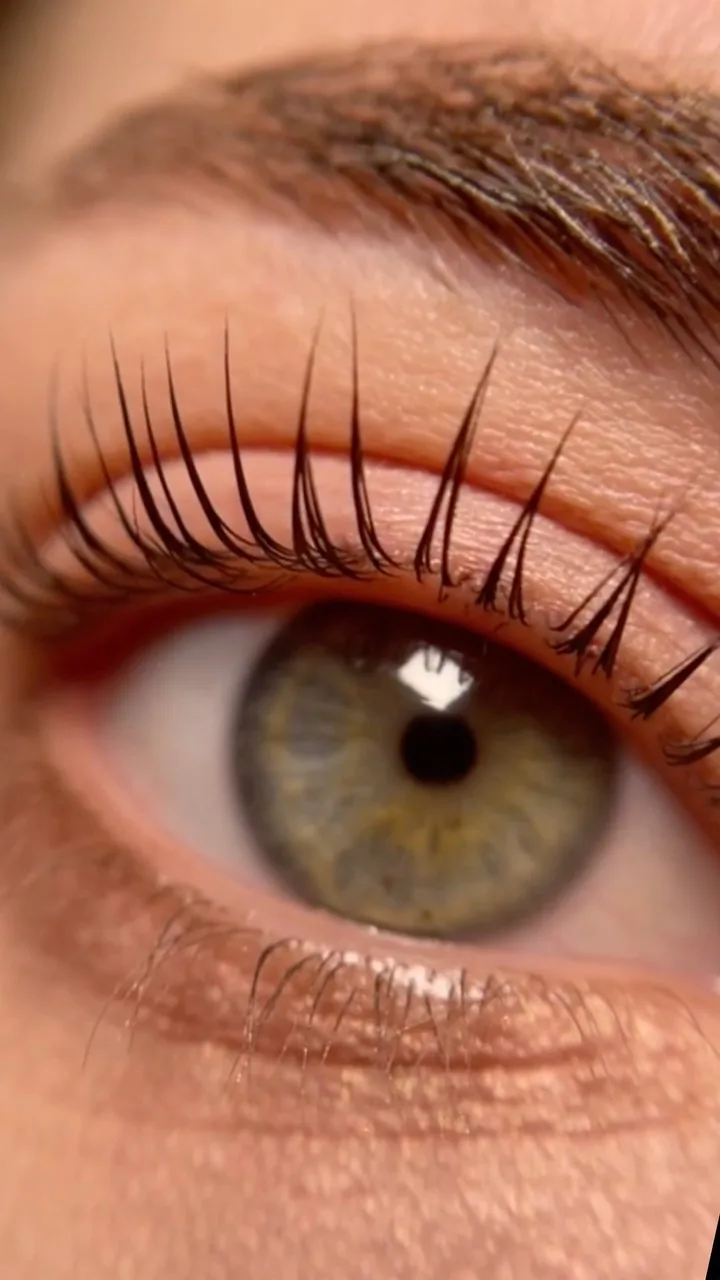
Lash Extension Removal: The Remover Explained
Plenty is said about having lash extensions applied. About having them taken off, almost nothing — even though it is the part every client feels sooner or later. We learned that from a survey of our own, in which you told us honestly what you would like us to improve, and the remover was one of the answers. So let us talk about it openly.
In our survey we found an answer about the discomfort caused by the remover used to take lashes off. So we thought Mariana could discuss the subject better than anyone.
From the studio’s experience
Why extensions are never pulled off
Every extension is glued to a natural lash, not to the eyelid. If you pull at it, it does not come away on its own: it takes with it the lash it was sitting on, whether that lash was at the beginning or the middle of its life cycle.
That is the whole difference between a proper removal and an improvised one: the first dissolves the adhesive, the second breaks the hair. The result of the second only shows weeks later, when the natural lashes that should have been there are missing.
What the remover is and how it works
The remover is a professional cosmetic product — cream, gel or liquid — that softens and dissolves the adhesive holding the extensions on. It does not act on the natural lash, it acts on the bonding point.
From the outside the procedure looks simple: protective patches under the eyes, the eye closed throughout, the product applied precisely on the bonding area, a waiting time, then the extensions lifted away with gentle movements and the area cleaned thoroughly. Simple to describe, but every step has a margin of error.
Where the discomfort comes from and what reduces it
The discomfort is real and there is no point denying it. It usually comes from three directions: the vapours of the product, which can irritate the eye even with the lid closed; too much product, which risks migrating under the lid; and an extended exposure time, “so it comes off more easily”.
What makes the difference on the artist’s side:
- isolating the eye properly with patches, leaving no gaps;
- a small amount of product, applied exactly on the bonding area, not along the whole lash;
- working in sections rather than along the entire row at once;
- keeping to the working time the manufacturer specifies, rather than improvising it;
- cleaning and neutralising thoroughly at the end, so no traces of product stay on the eyelid.
What makes the difference on your side: tell your artist, in real time, if anything stings. Do not wait for it “to pass”. A sensation that keeps building is reason enough to stop, clean and start again differently, and a good artist will always take that over a client who grits her teeth.
How long a proper removal takes
With us, lash extension removal has 30 minutes allotted and costs from 70 MDL. It is not a five-minute job squeezed in before something else, precisely because a short time is itself the source of the problems: whoever is in a hurry either uses more product or pulls.
If you have come for a new set, the removal is booked separately in terms of time, ahead of the application. Tell us when you book that you have old extensions on — otherwise the slot reserved will not cover both pieces of work.
What to do at home straight afterwards
After removal the eyelid can be slightly sensitive for a few hours. The advice is short and simple:
- for the first few hours, no eye make-up and no rubbing the eyelid;
- wash the lashes gently, with a mild oil-free product, and let them dry naturally;
- brush them lightly, with a clean brush, in their natural direction;
- if redness appears and does not settle within a few hours, write to us — we want to know.
On day one your lashes will look shorter and sparser than you remembered them. That is a contrast effect, not a sudden loss: your eye had grown used to the added length.
The pause before a new set or a lash lift
If your natural lashes are healthy, a new set can go on straight after the removal. If they are visibly weakened or sparse, your artist will suggest a break — and it is a “no” worth listening to, because extensions are not applied to lashes that are very fragile or damaged by earlier treatments.
The same principle works the other way round: lash lamination is not done over extensions, nor immediately after a removal if the hair is weakened. That is assessed in person, not over the phone.
The signs it is time to remove rather than infill
Infills are done every 2–3 weeks, because natural lashes shed and renew themselves constantly. But infills have a limit.
Book a removal rather than a fill if: more than 4–5 weeks have passed since your last visit; the remaining extensions are twisted or pointing in all directions; you can feel hairs stuck together; or you simply no longer know what is natural lash and what is extension. In those cases a new set laid over the old layer looks poor and weighs needlessly on the natural hair.
At MY MARAFET STUDIO, extensions are Mariana’s territory. The rest of the upkeep rules, between visits, are in our extension aftercare guide, and the full prices, including adding lashes from 500 MDL, are on the lash extensions page.
FAQ
Can I take the extensions off at home?
We would not recommend it. The remover is a professional product used a few millimetres from the eye, and pulling extensions off takes the natural lashes they were glued to with them. Removal in the studio takes 30 minutes and costs from 70 MDL.
Will my own lashes be sparser after removal?
On day one they will seem shorter and sparser to you, because your eye had grown used to the added length. Natural lashes shed and renew themselves anyway, in their own cycle; what matters is that they were not pulled out earlier than they should have been.
How long do I wait before a new set?
If your natural lashes are healthy, you can have a new set straight after the removal. If they are weakened or sparse, your artist will suggest a break and we reassess at the next visit — extensions are not applied to fragile hairs.
Updated